Physical World
People, animals, and objects in physical spaces are constantly moving and changing.

This AI-generated demonstration illustrates how Omni-Sync technology works.
Omni-Sync uses AI vision technology to integrate information from multiple cameras into one connected space. It continues analyzing the movement of people, animals, and objects as they leave one camera’s view and appear in another. This helps reveal on-site conditions, such as congestion and waiting times, to support efficient operations and informed decisions.
The real world is always moving. With a single camera, information continuity disappears when an object leaves the frame. Omni-Sync connects cameras and sensors to minimize those gaps.
People, animals, and objects in physical spaces are constantly moving and changing.
On-site devices are the first to capture changes in the physical environment.
Find people, animals, and objects in video in real time.
Assign unique IDs to detected objects and keep following their movement.
Connect observations across cameras into one object record.
Record object attributes such as position, behavior, and condition.
Interpret spaces and objects through accumulated data.
Turn real-world changes into data that can be searched and reasoned about.
Align camera observations within one coordinate system, add other sensor data, and analyze object attributes and changes over time for a deeper understanding of physical space.
Connect positions observed by each camera to physical coordinates. Analyze where an object is, where it moves, and how long it stays in an area—not just its pixel position on a screen.
Align camera data to a shared spatial reference to reconstruct the physical environment as one digital map.
Omni-Sync is not limited to RGB footage. Depending on the measurement goal, depth, thermal, LiDAR, radar, and environmental IoT sensors can enrich information about objects and spaces.
Combine different sensor data into shared real-world information—for example, identifying objects in RGB footage while measuring actual distance and size with depth data.
Meaningful information often comes from changes over time rather than a single state. Omni-Sync accumulates data for each object to analyze movement patterns, repeated behavior, dwell time, and how space usage changes throughout the day.
Go beyond analyzing a scene to recording and understanding the history of real-world change.
Omni-Sync begins by connecting separate camera views into one space and continuing to track objects beyond a single camera's view.
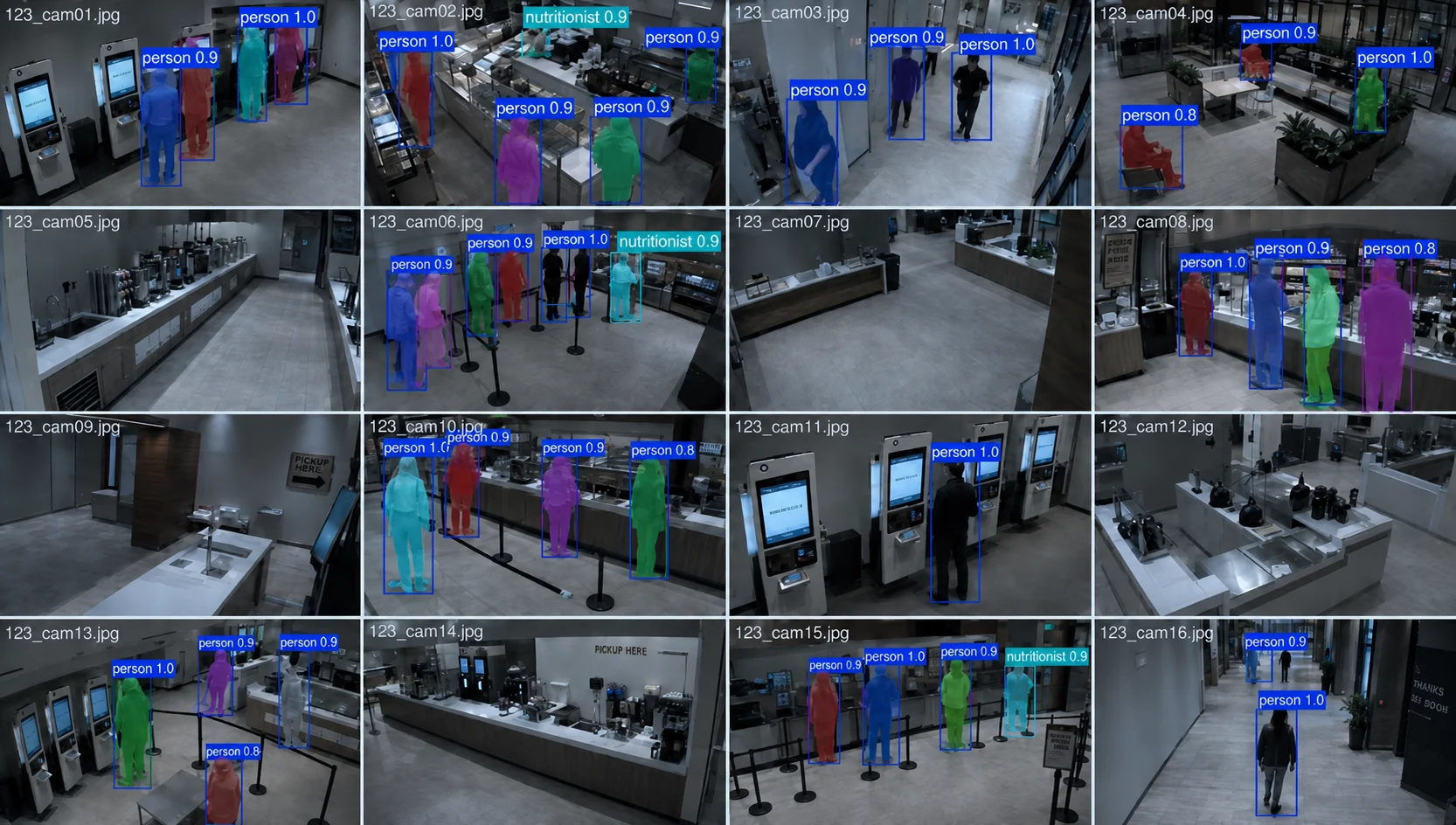
Real-world objects do not stay within one camera's view. Omni-Sync analyzes multiple feeds simultaneously, connecting each view into shared spatial information.
Coverage expands as cameras are added. Add cameras and sensors wherever needed instead of being limited to a single fixed field of view.
Analysis happens immediately at the edge, with a design that retains only necessary data rather than sensitive information such as faces.
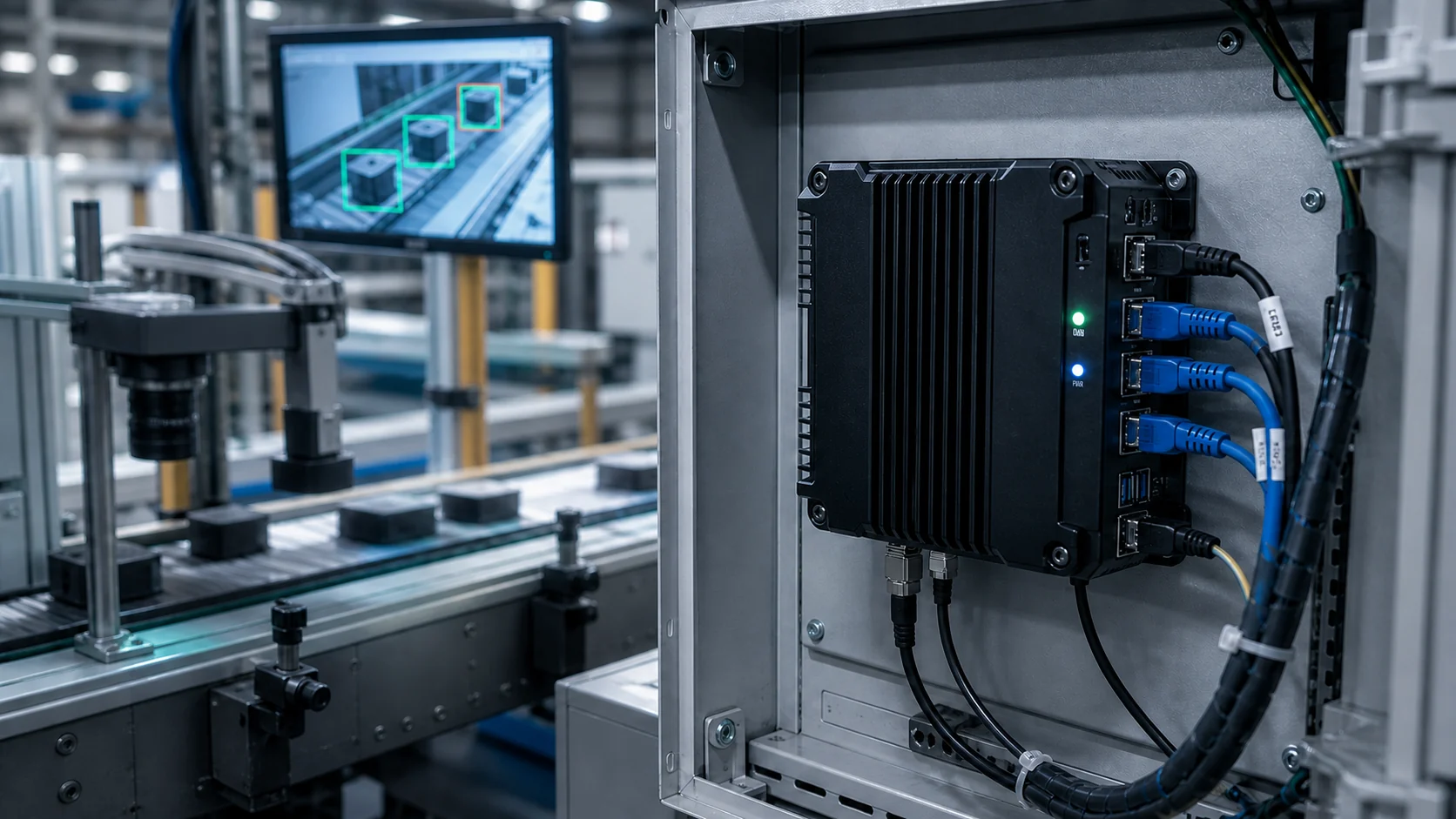
Omni-Sync is designed to perform much of its analysis on local edge computers. Rather than sending all footage to a central server or cloud for processing, AI inference runs close to where data is generated.
Reduce dependence on network conditions while enabling fast on-site decisions and responses.
Meaningful changes become real-time events connected to operational systems. LLM integration enables natural-language questions, and coverage grows as cameras and sensors are added.
Omni-Sync evaluates meaningful conditions using object and spatial data. It can generate events for overcrowding, entry into hazardous areas, or unusually long dwell times.
Alerts reach the responsible person as soon as a condition is exceeded. The right information reaches the right person at the right moment, without constant screen monitoring.
Organize distributed data by site and time in one dashboard. One view brings the whole site together without switching between systems.
Accurate analysis has limited value if its data stays isolated. APIs deliver results to external systems in a standardized format.
Alerts, integrations, and controls depend on response time. A situation may already have passed while a decision travels through the cloud. On-site Edge AI evaluates and acts locally.
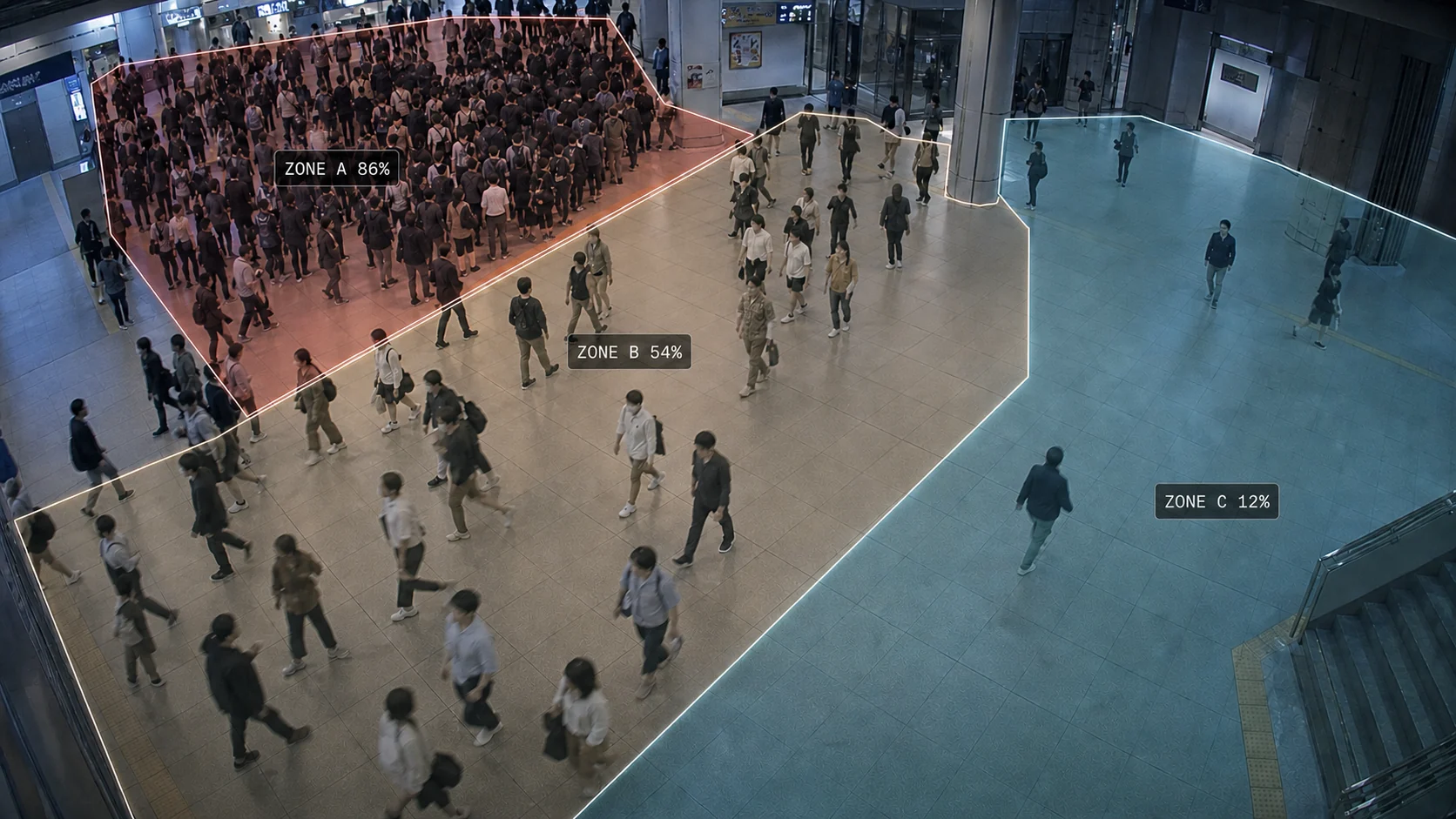
One camera shows only a limited view, while real spaces span overlapping and connected views. Separate feeds cannot reveal where people are concentrated or where capacity remains. Zone occupancy and congestion combine detections across cameras into a spatial measure of how busy each area is. See the density of the whole space, not a collection of separate screens.
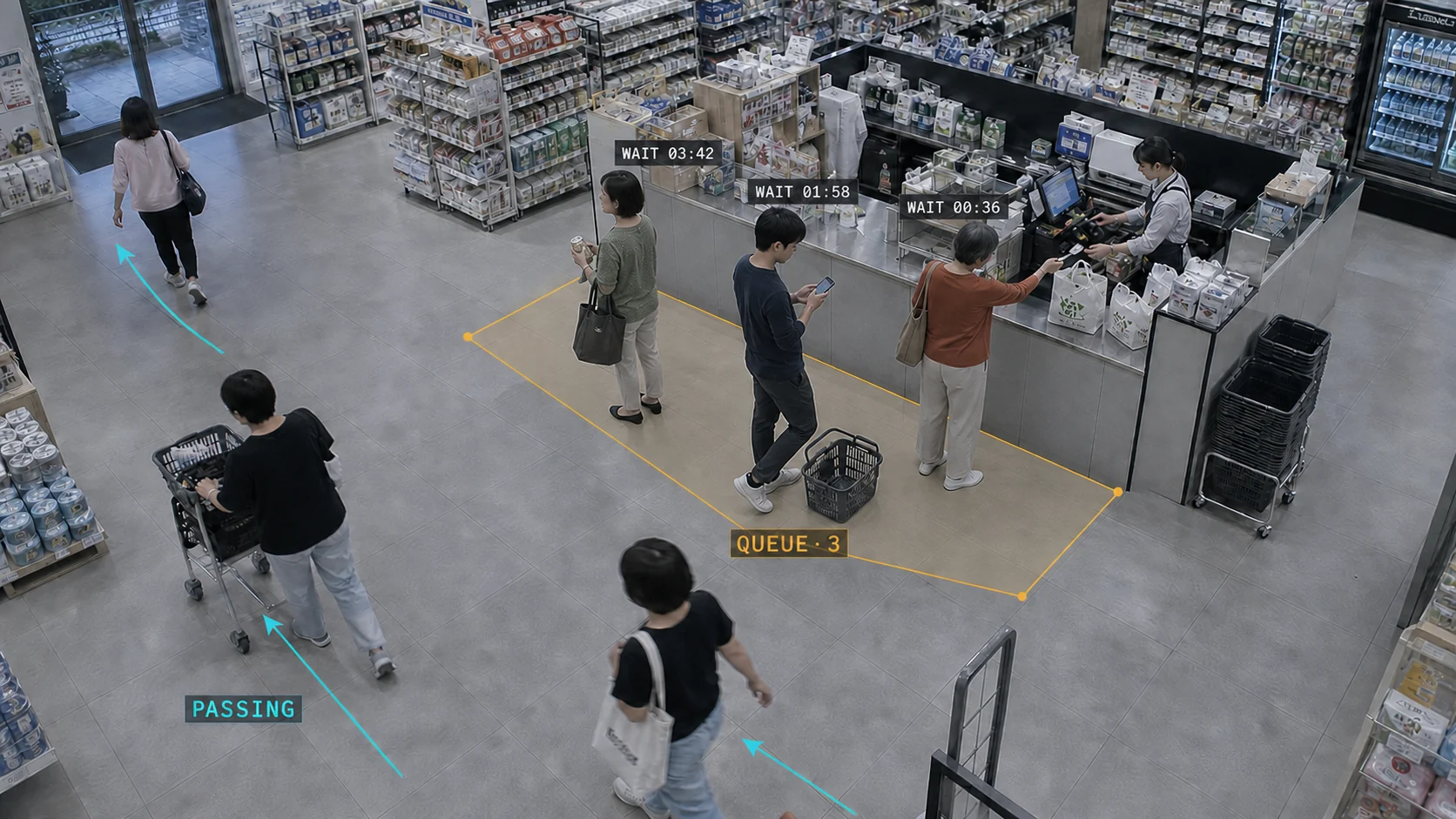
Someone passing by and someone waiting in one place mean different things operationally, but object detection alone cannot distinguish them. By calculating time spent in an area, queue and dwell-time analysis separates waiting from through traffic. Video becomes an understanding of the situation.
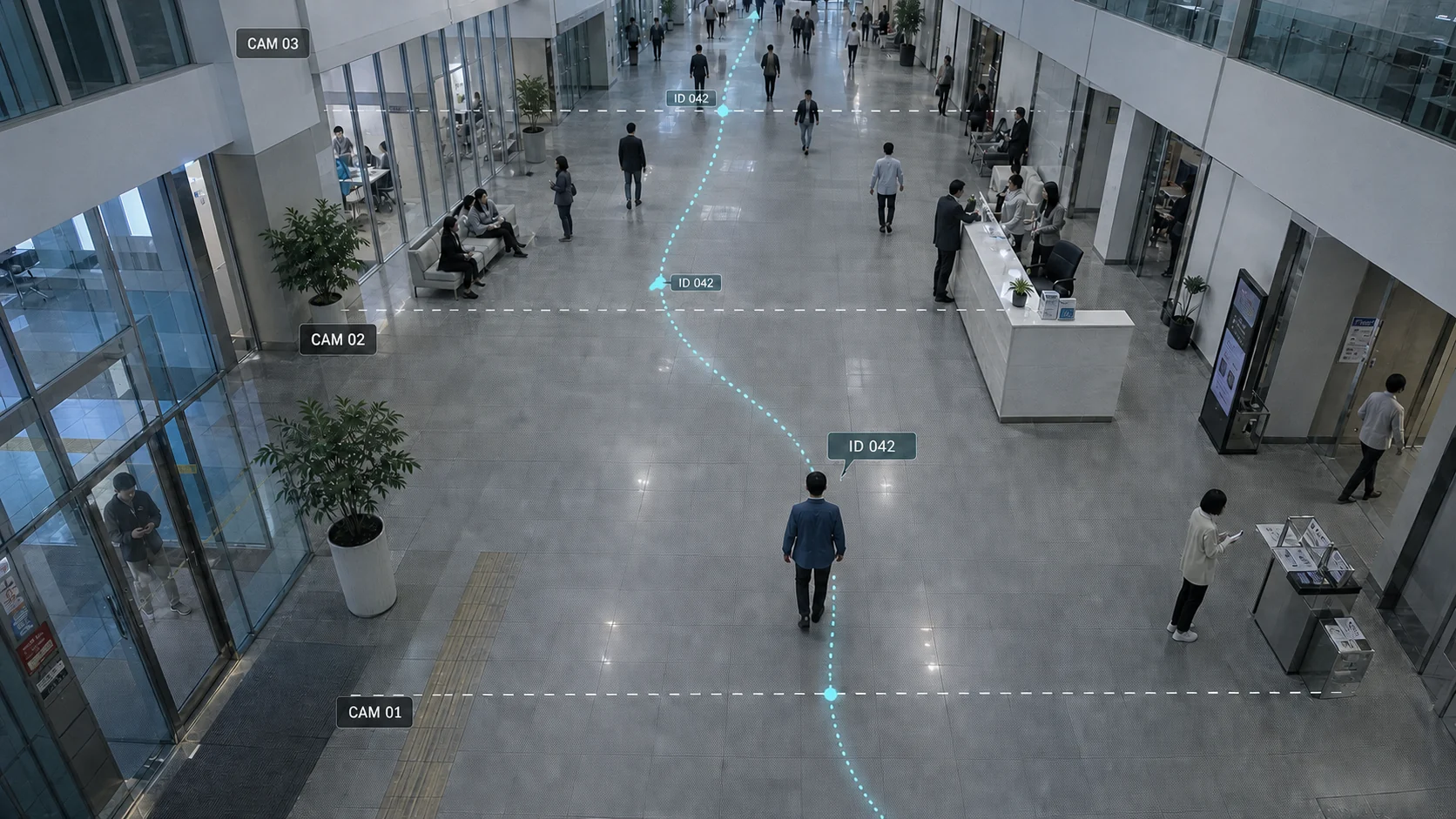
At multi-camera sites, the same person may appear in several feeds simultaneously or sequentially. Combining observations within shared spatial coordinates creates one continuous flow without duplicate records. Multiple perspectives become one space.
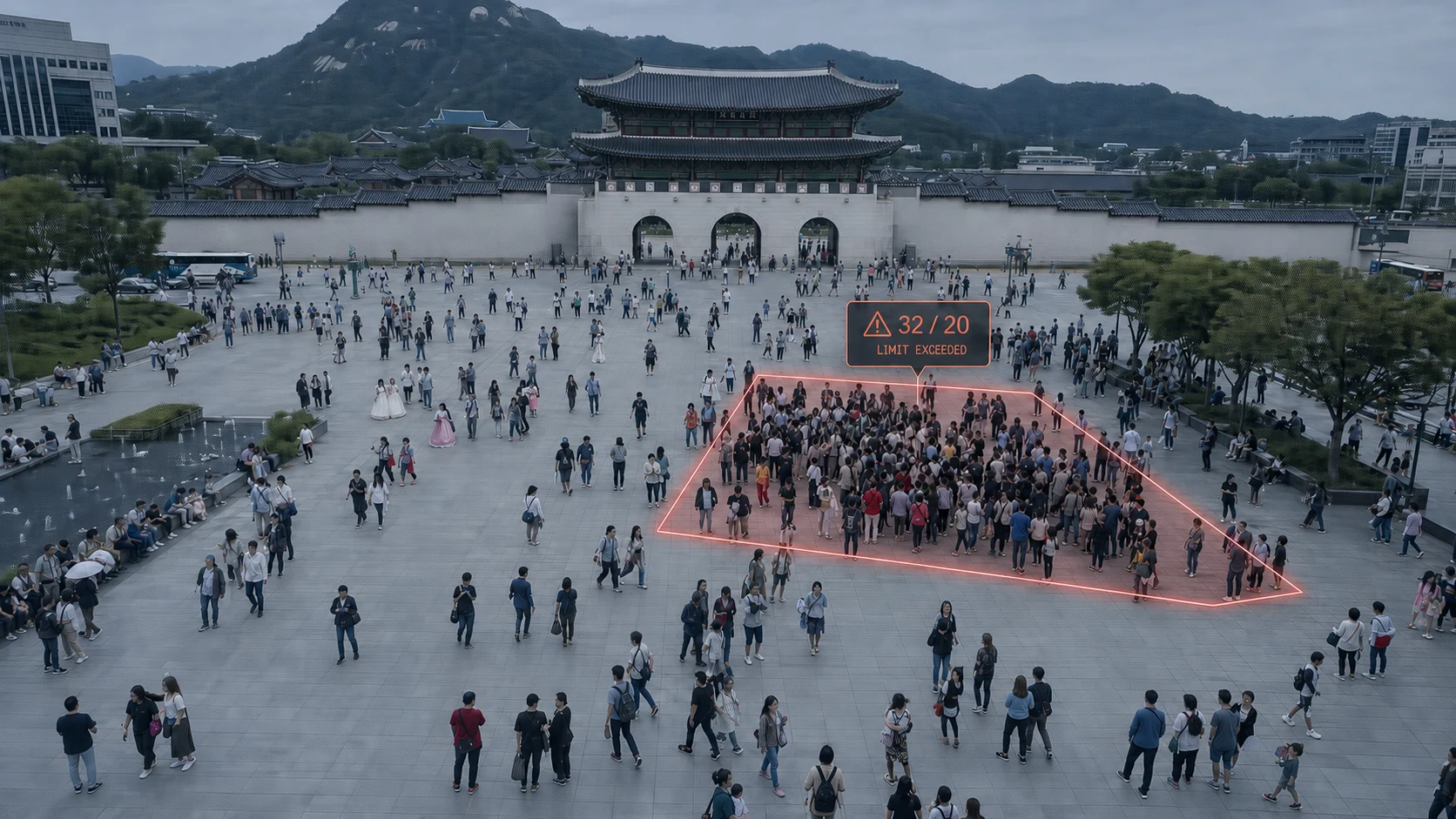
Even accurate data is difficult to act on if someone must watch it constantly. Congestion thresholds or unusually long stays can be missed. Real-time evaluation against predefined conditions automatically identifies the moment a threshold is crossed.
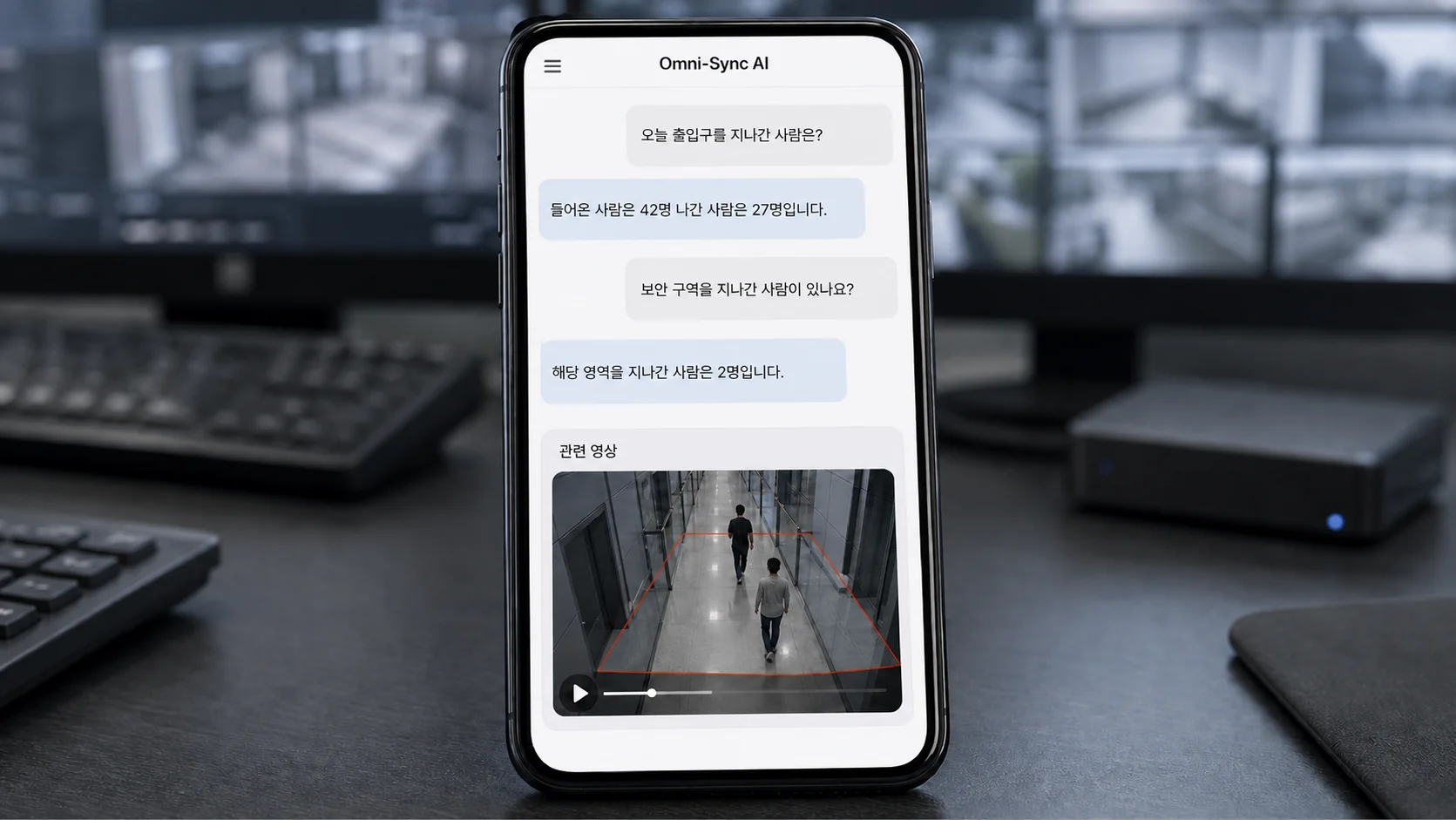
Ordinary CCTV footage is difficult to use without manually reviewing it. Omni-Sync converts events into structured, object-centered data. Connected to LLMs and AI agents, this data lets operators ask questions in natural language instead of reviewing all the footage.
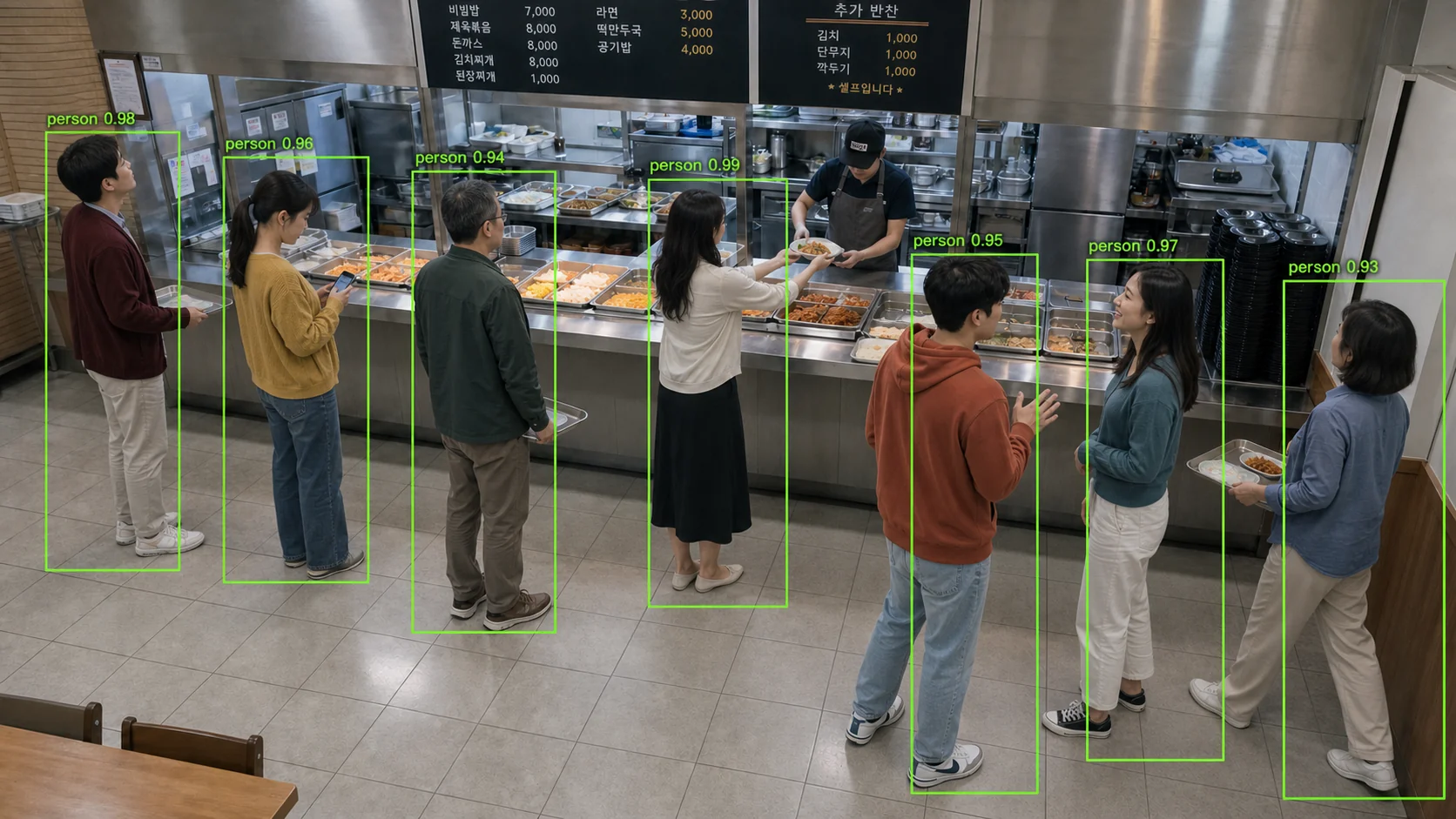
Turn the movement of people, animals, and objects into intelligent data to understand spaces and respond.
Explore the solution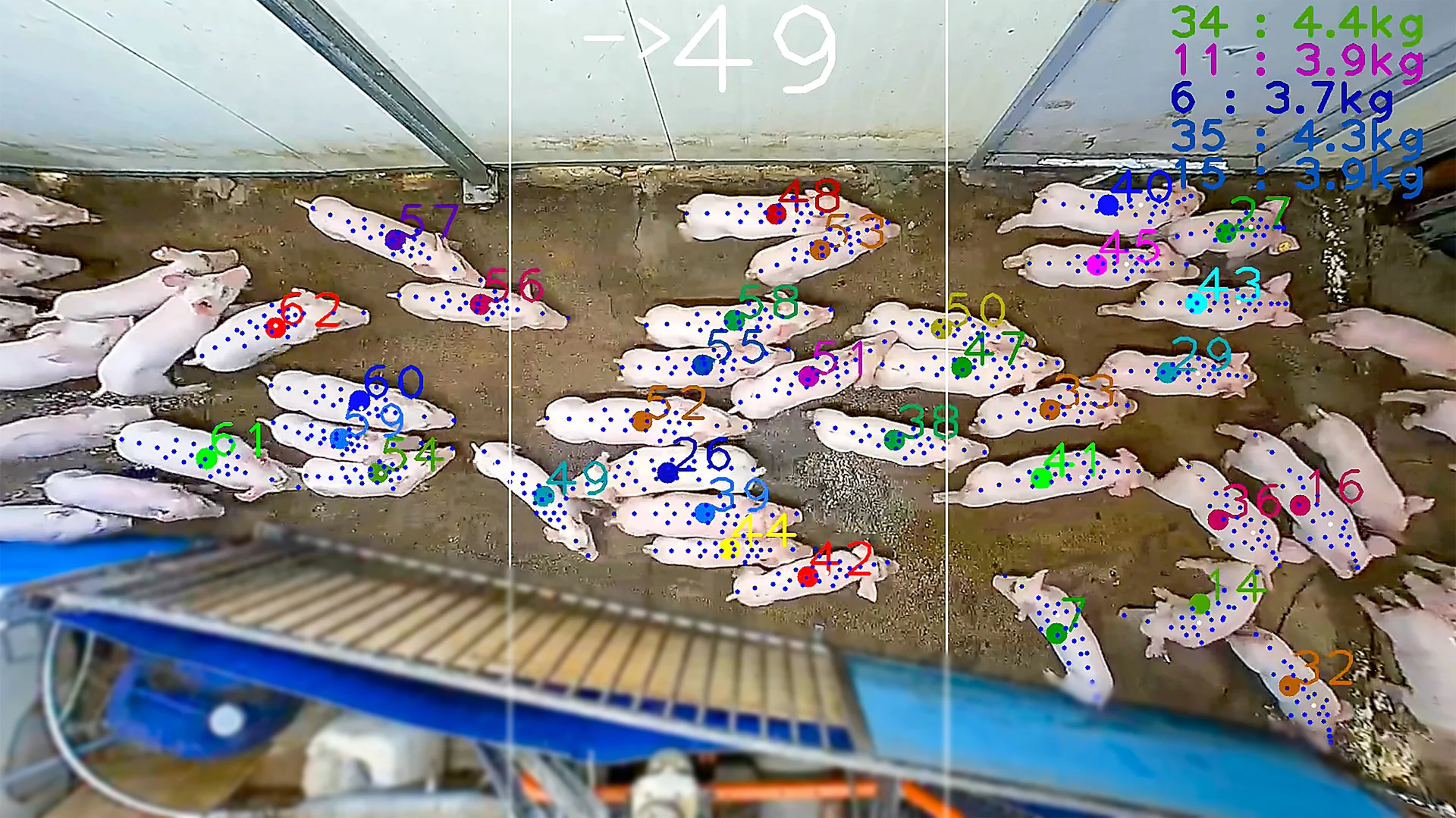
Analyze livestock behavior and changes in condition to support on-site decisions.
Explore the solution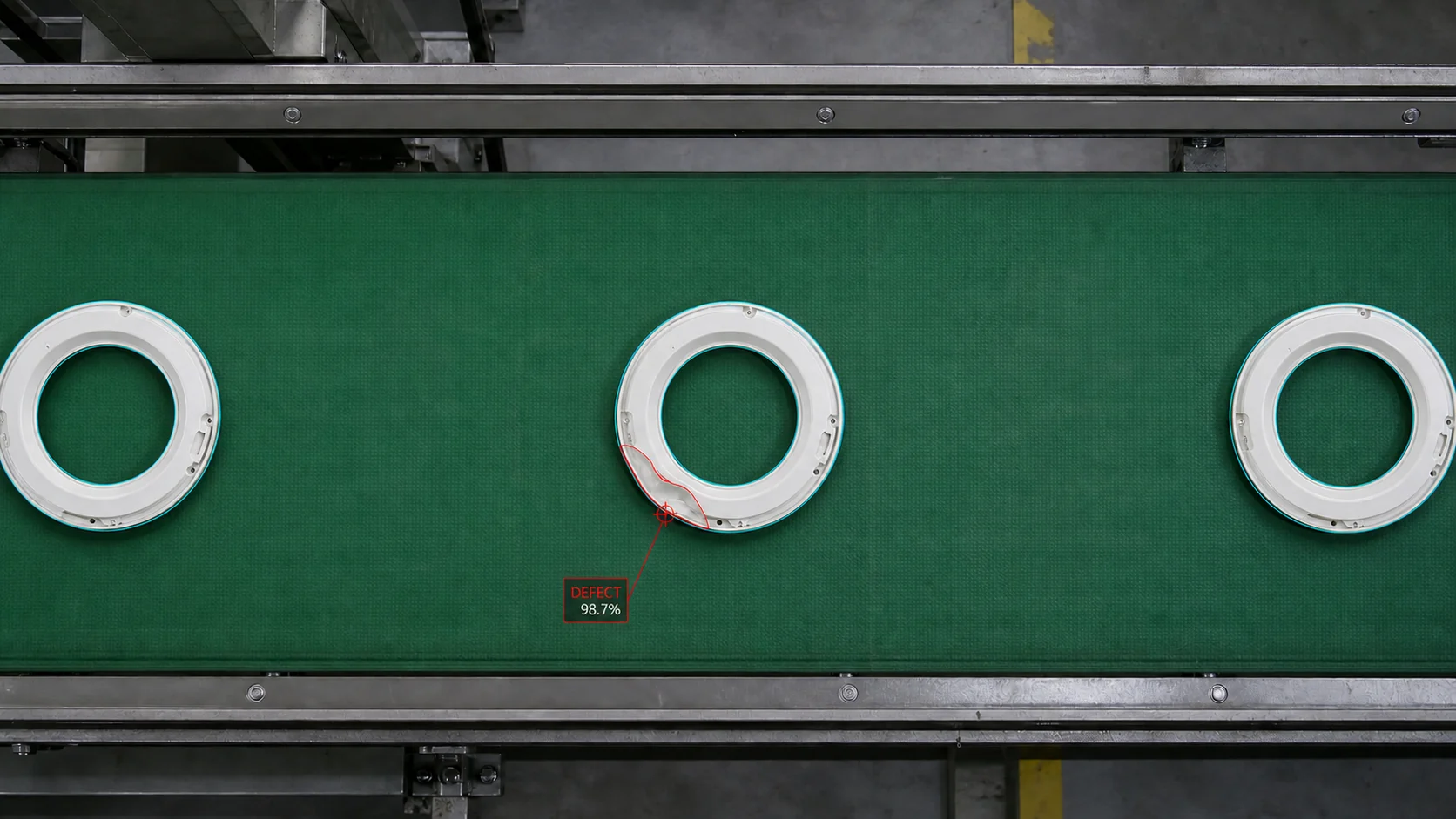
Combine surface information from multiple sensors into inspection data to identify defects.
Explore the solution