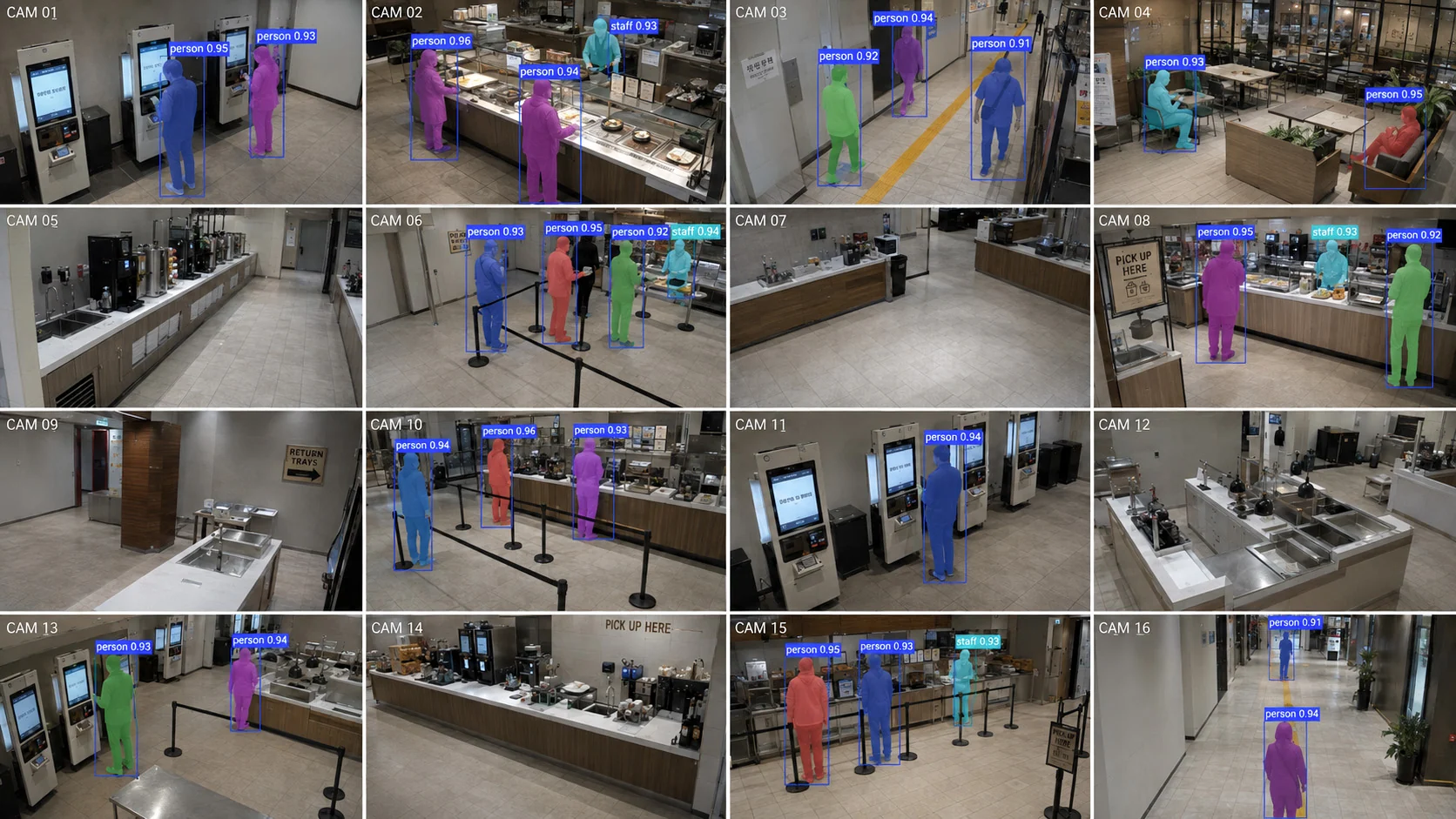
Space Intelligence is an AI vision solution that connects information from multiple cameras into one space, helping you understand and operate physical environments efficiently.
Understand what is happening in your space right now.
Measure five key aspects of a space in real time: occupancy, movement flow, queues, dwell time, and congestion.
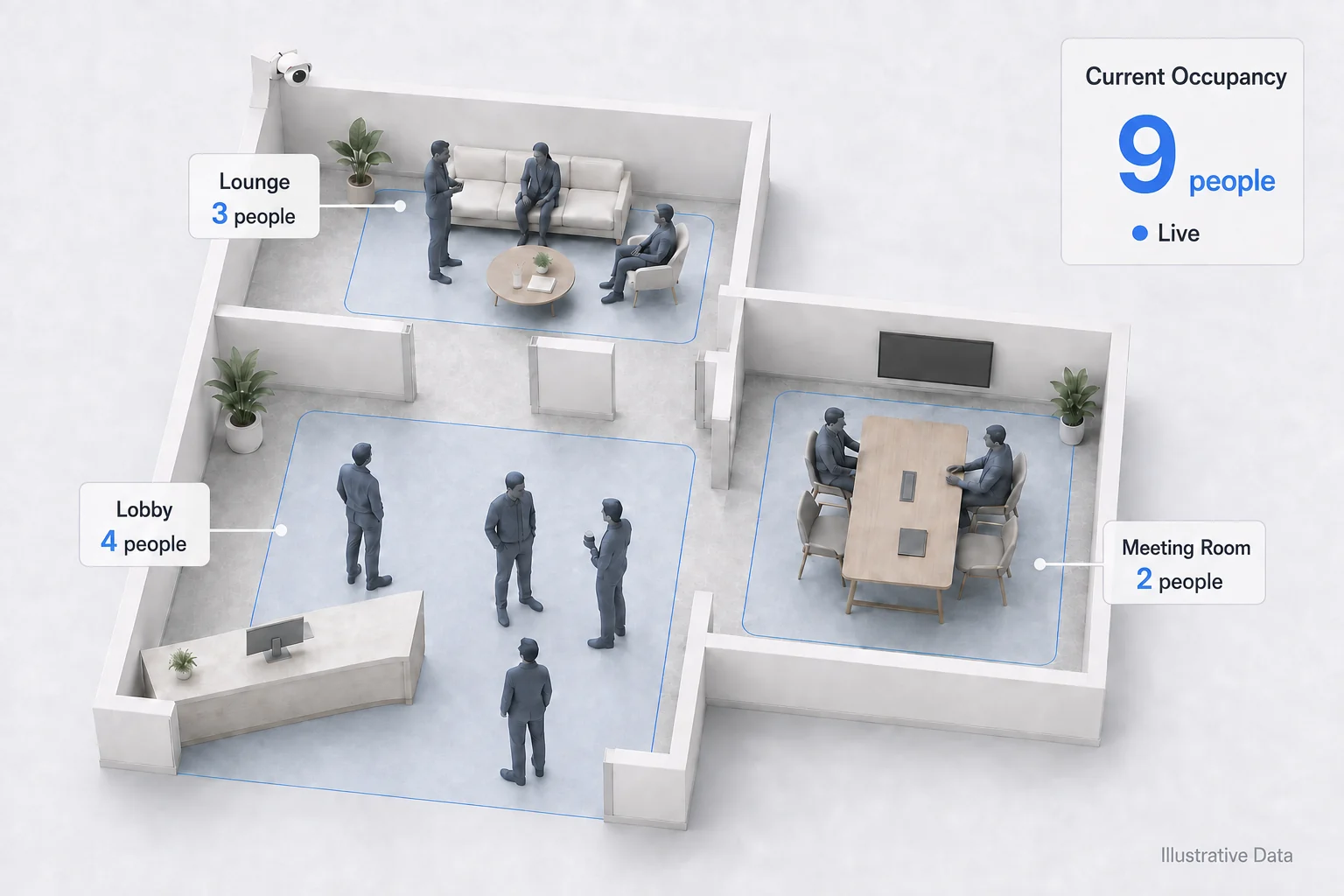
Know how many people are in a space right now.
Space Intelligence continuously analyzes entry and exit to measure how spaces are being used in real time. Beyond counting passersby, it shows how many people are currently staying in each area.
Operators can understand the current state through numbers without checking the site in person.
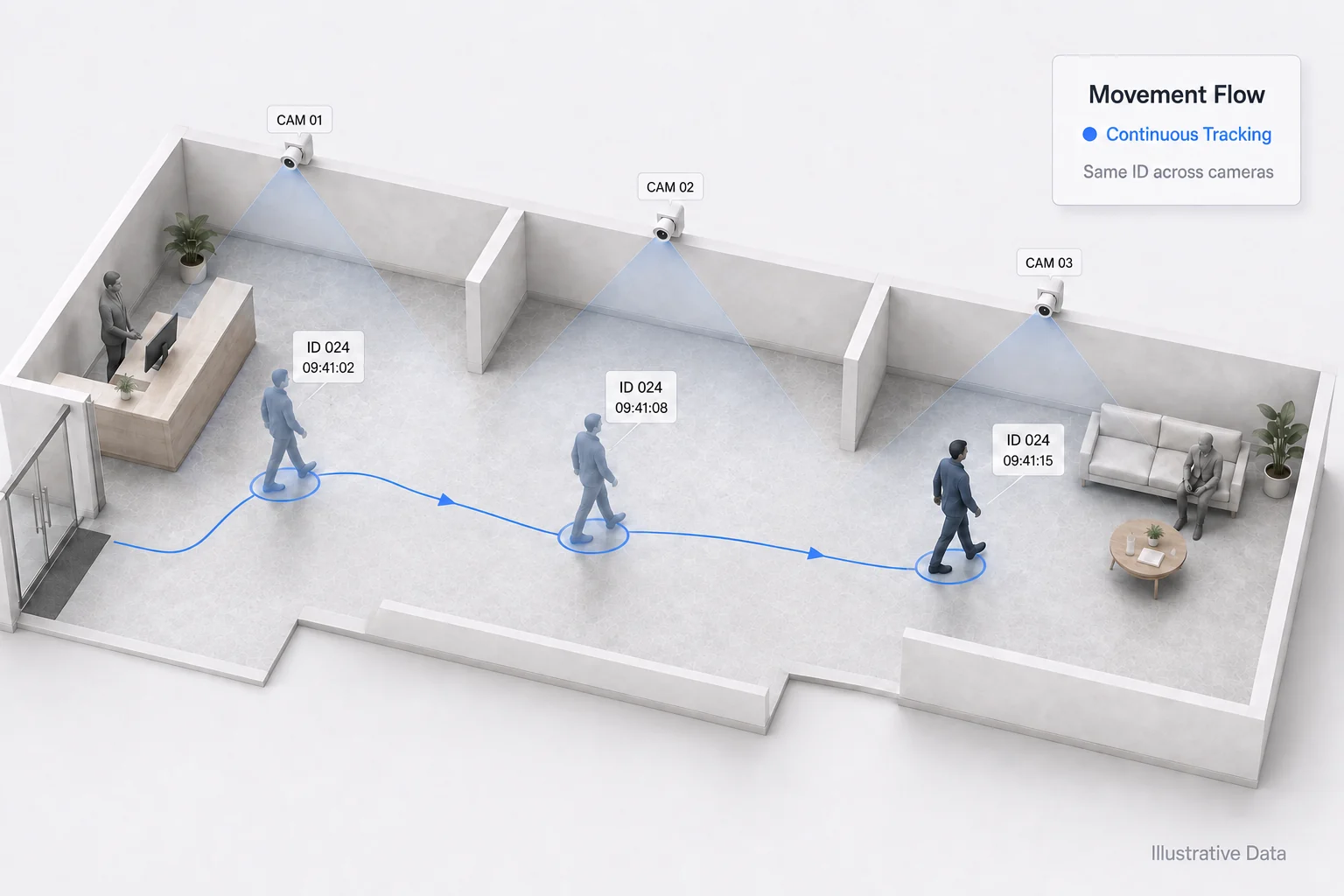
Understand where people come from and where they go.
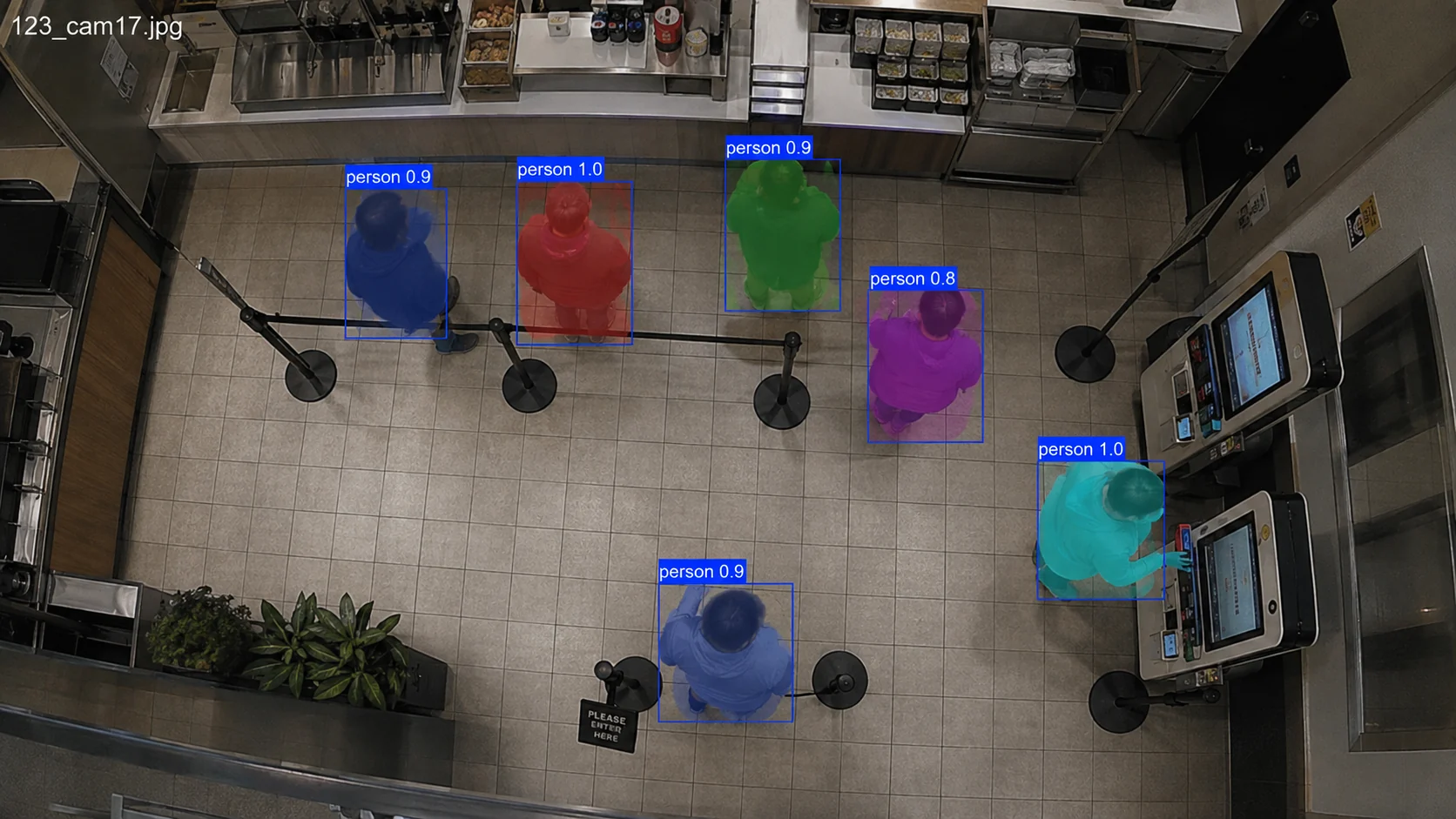
A headcount alone cannot describe a space. Using Omni-Sync multi-object tracking, Space Intelligence continuously records each object's movement. When an object leaves one camera's view, another camera maintains the continuity of its path.
Understand not just how many people are present, but how they use the space.
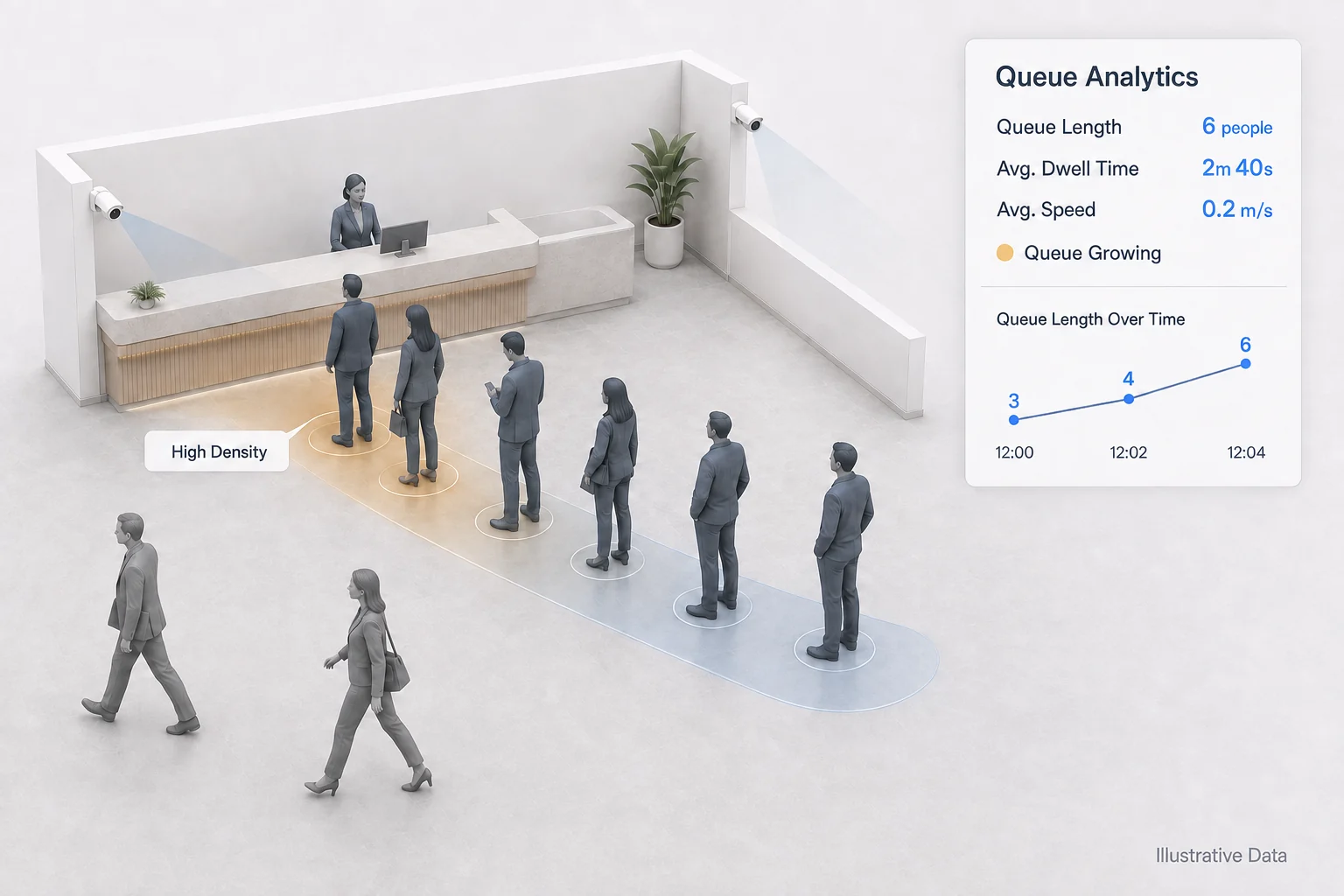
Measure how queues form and change.
A queue is more than a headcount: it is a pattern of people waiting in a specific direction and location. Space Intelligence combines position, speed, dwell time, and density to measure waiting conditions.
Observe how congestion develops instead of only responding after a problem occurs.
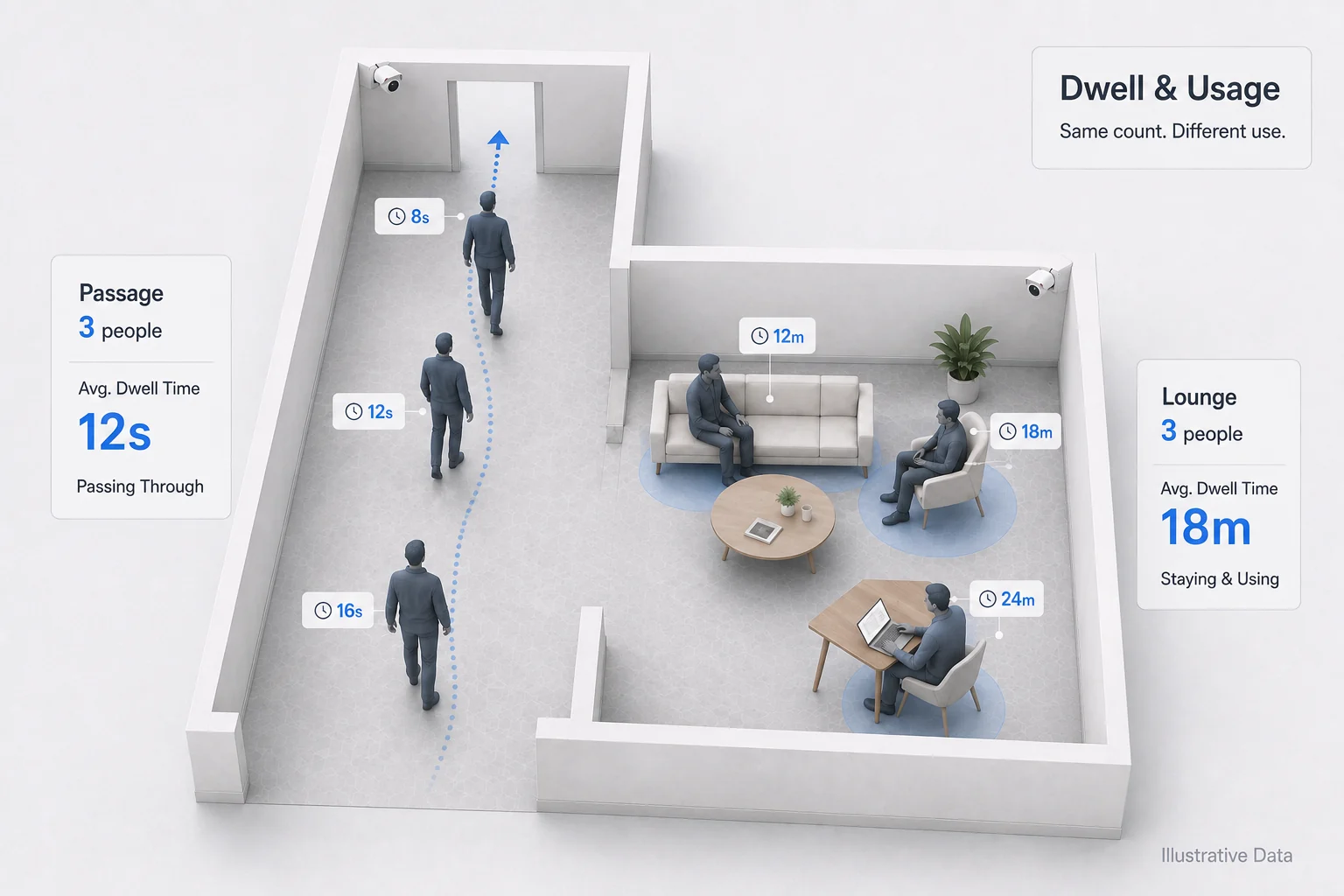
Measure how spaces are actually used.
The same number of people can use spaces very differently. A passageway and an area where people linger have different operational meanings. Space Intelligence analyzes individual dwell times and usage patterns by area.
Improve layouts and operations based on actual usage patterns.
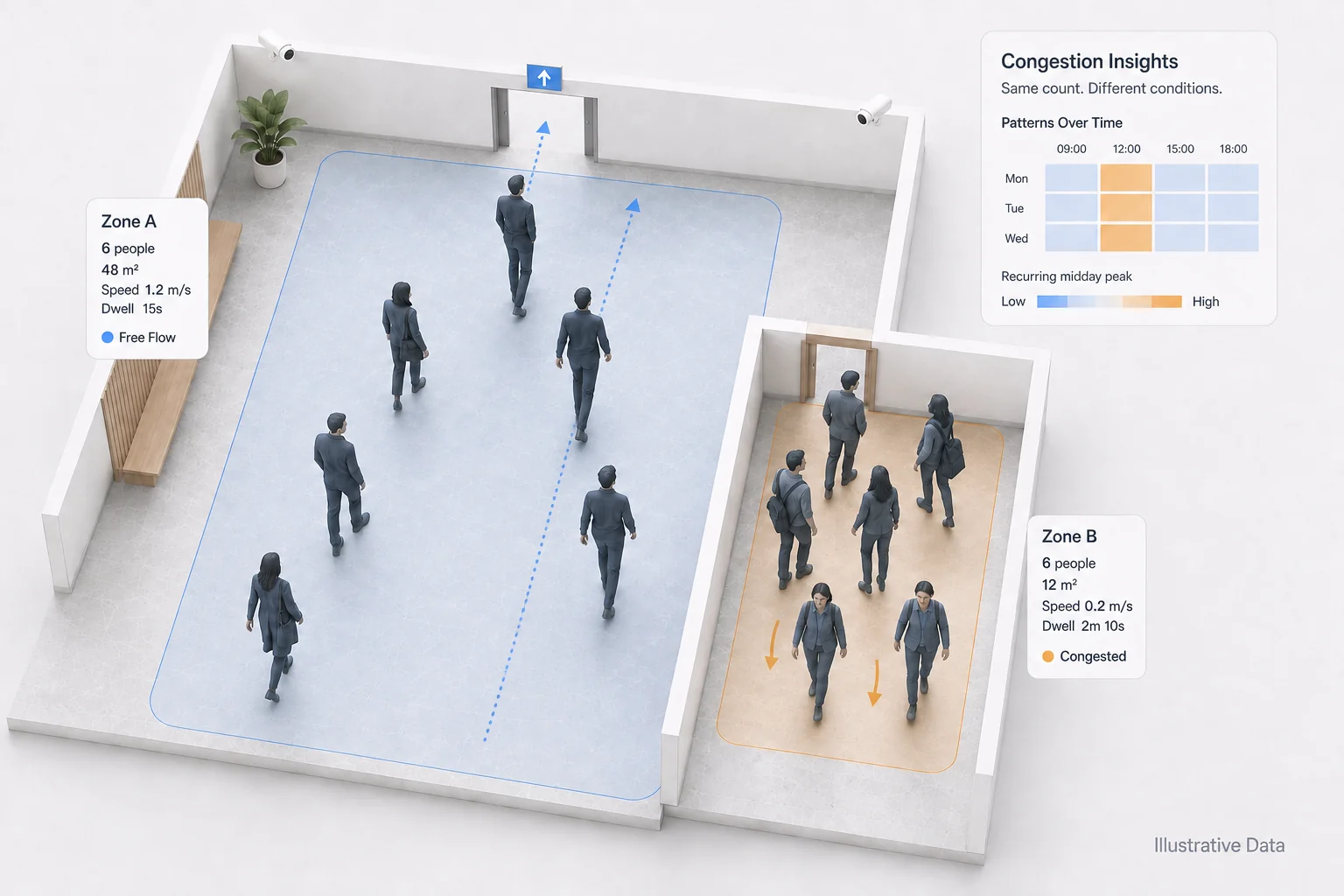
Move from detecting congestion to understanding it.
Space Intelligence does not determine congestion from a headcount threshold alone. It analyzes area size, occupancy, speed, dwell time, direction, and other spatial information together.
Data accumulated over time also reveals recurring congestion patterns and differences in demand between spaces.
Expand your coverage and analyze relationships.
Connect multiple cameras into one space and extend analysis beyond people to objects and their relationships.
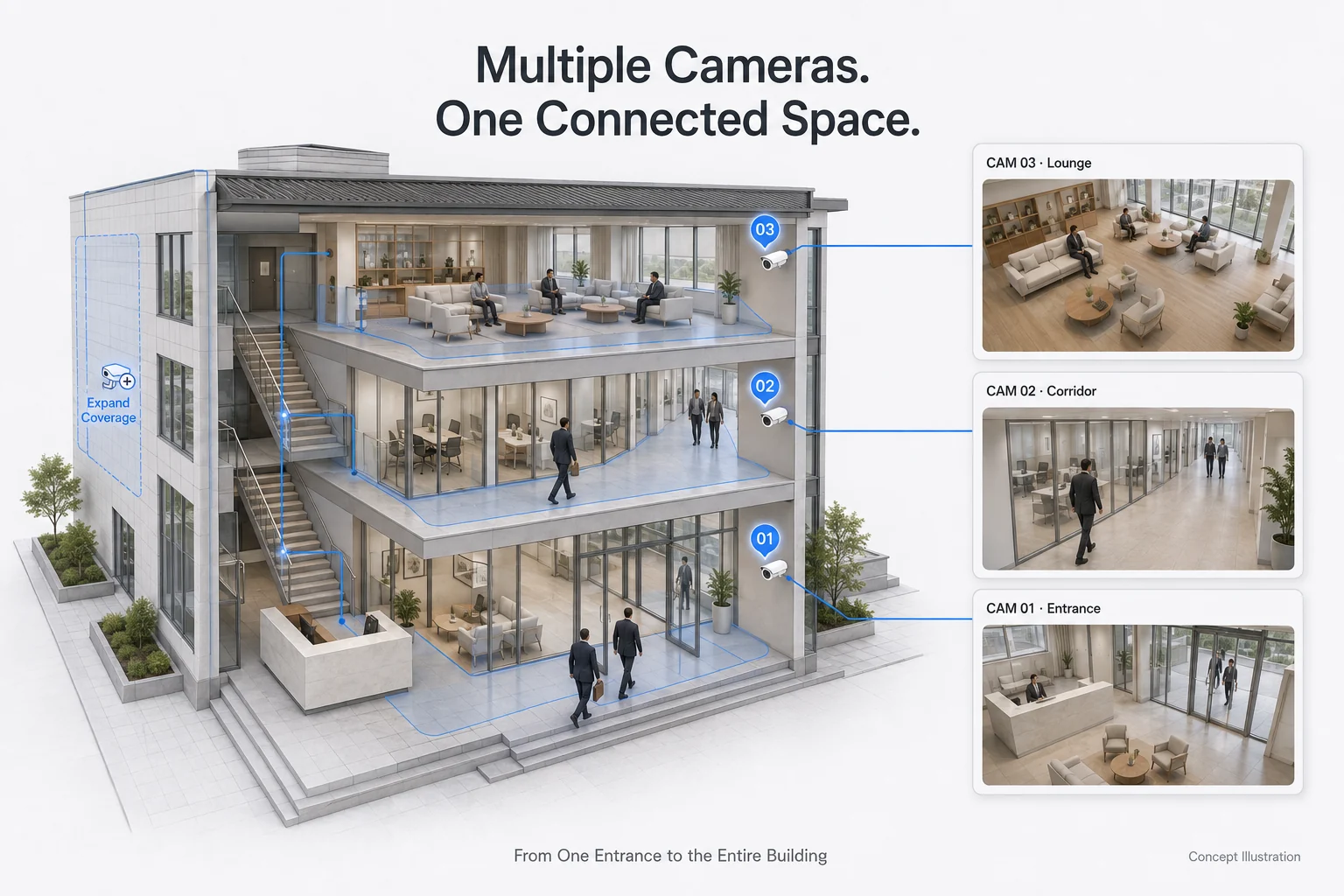
Large spaces cannot be observed with one camera. Omni-Sync connects areas seen by multiple cameras, processing them as one physical space rather than separate video feeds.
Add cameras to expand coverage naturally, from a single entrance to an entire building.
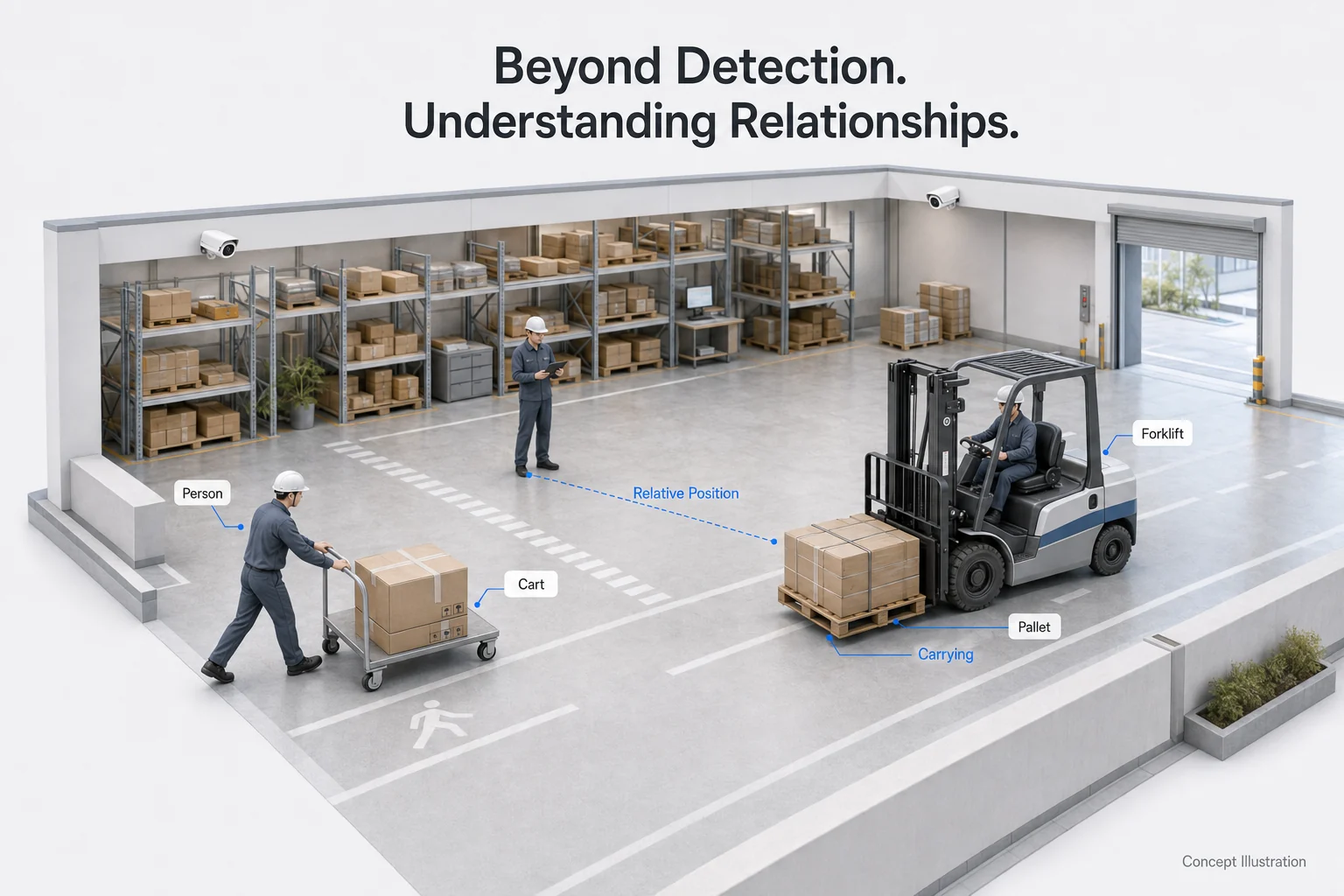
Analysis is not limited to people. Depending on the site's purpose, vehicles, carts, equipment, and other objects can be detected and tracked, including their relationships with one another.
Detect vehicle movement and understand how traffic flows through a space.
Extend detection beyond people to vehicles to observe movement within a space.
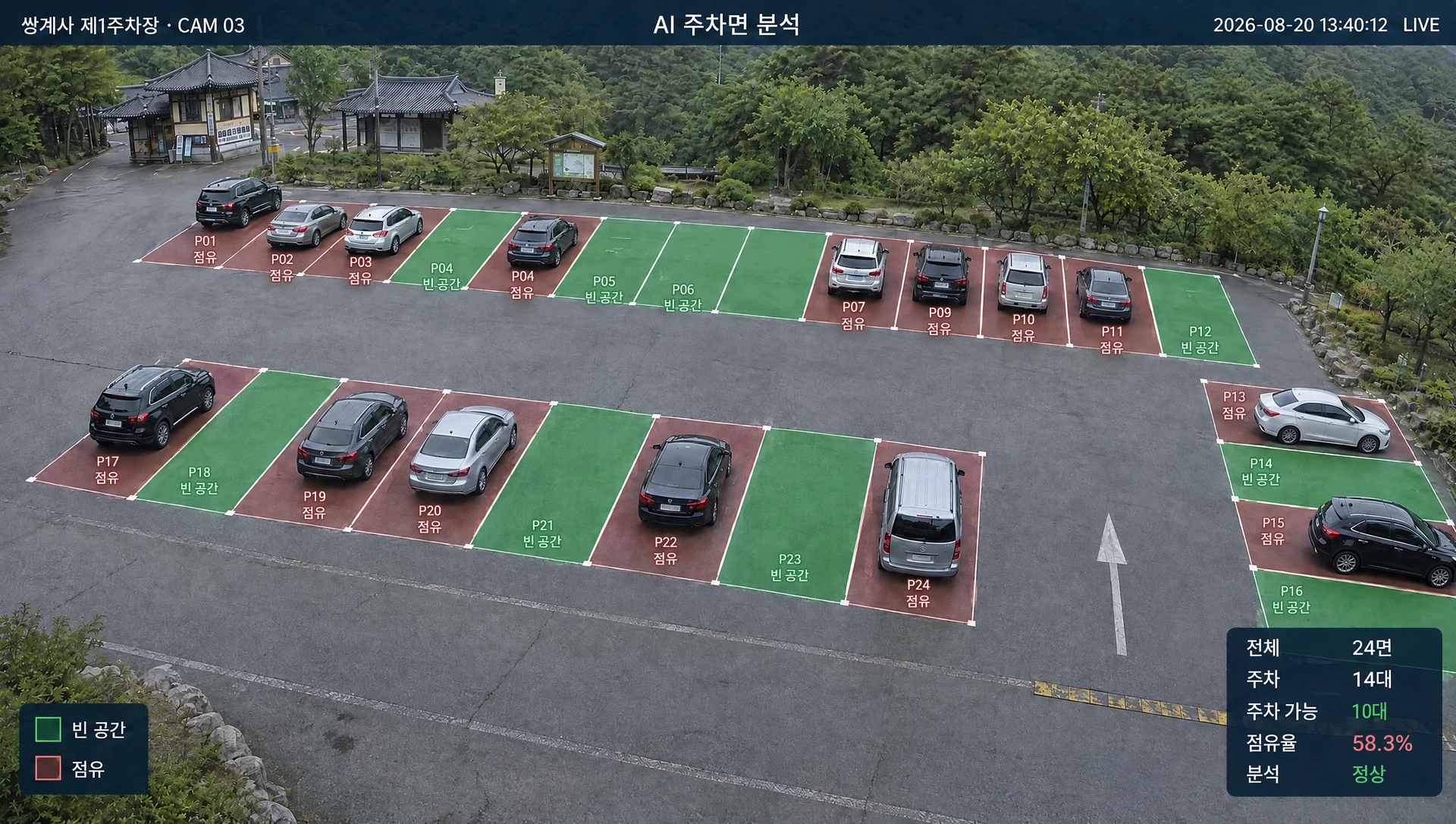
Distinguish occupied and vacant parking spaces to determine how many vehicles can park.
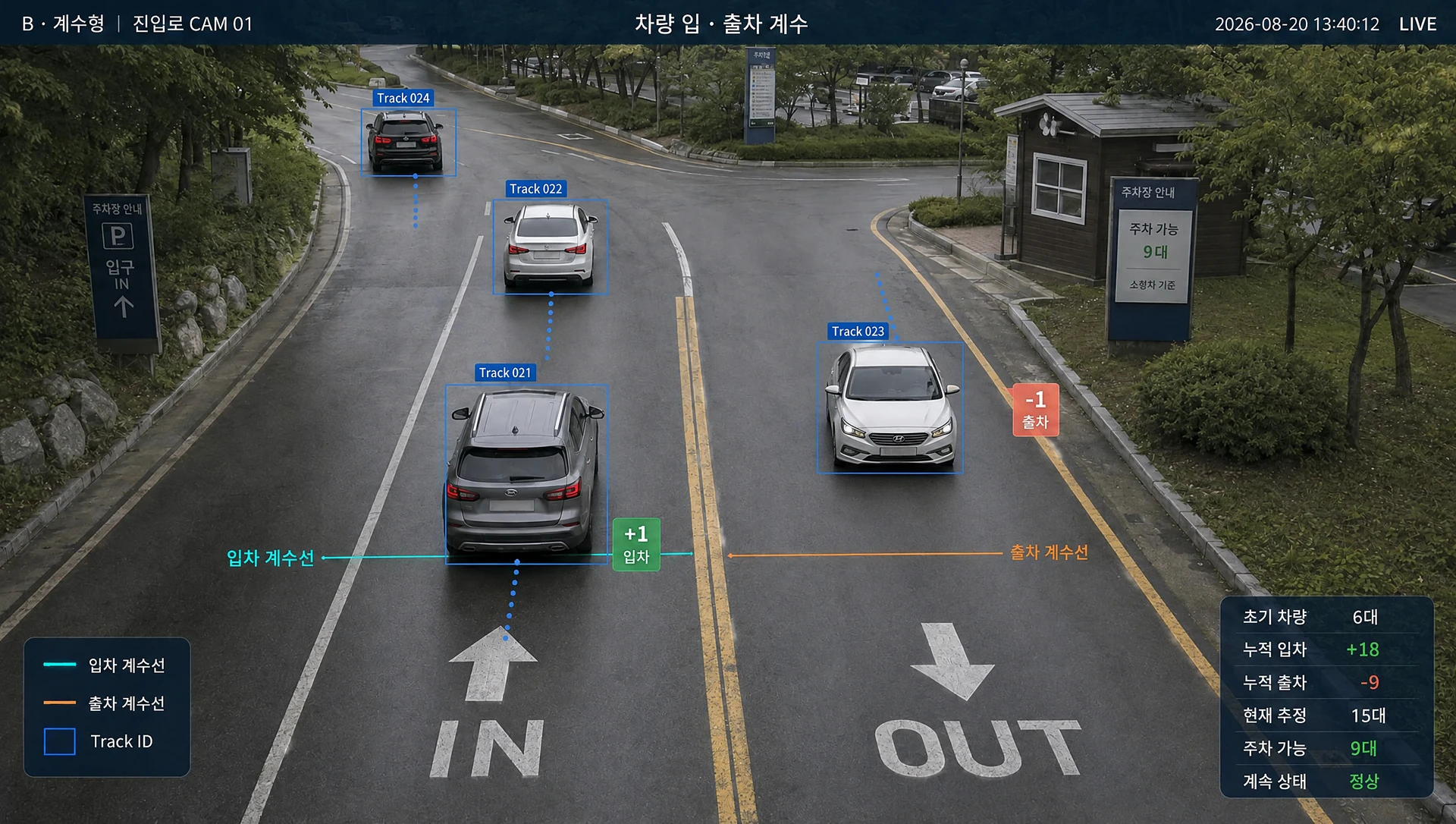
Track each vehicle’s movement and count entries and exits based on its direction of travel.
Respond to events with a foundation for safe operations.
Turn anomalies into real-time events, process them quickly at the edge, and use a design that does not identify individuals.
Events and safety
Recognize changes in your space.
Space Intelligence turns deviations from normal flow and operator-defined conditions into real-time events. It can detect overcrowding, unusually long stays, restricted-area entry, wrong-way movement, sudden queue growth, unattended objects, and unsafe proximity between people and equipment.
Go beyond observation and enable an on-site response.
Edge-based processing
Analyze on-site video right where it is captured.
Space Intelligence is built on Omni-Sync's Edge AI architecture.
Object detection, tracking, and spatial analysis can run on local edge computers instead of sending all footage to external servers.
Add spatial intelligence while making the most of existing CCTV infrastructure.
Privacy-conscious design
Understand spaces without identifying people.
The goal is to understand spatial conditions and movement, not personal identity. People in footage can be blurred and tracked through anonymous object IDs.
What matters is intelligence for operating a space, not who an individual is.
Connect insights to your existing operations.
Go beyond a standalone dashboard. Integrate results with existing systems and put them to work in day-to-day operations.
From AI that analyzes spaces to intelligence that helps operate them.
Display
Operational dashboards, central monitoring, live status boards
Notify
Operator notifications, mobile alerts, anomaly events
Guide
Digital signage, workplace apps, web interfaces, congestion displays
Integrate
APIs, facility management, booking systems, BI data platforms
Control
IoT devices, PLCs, access controls, facility systems
In practice
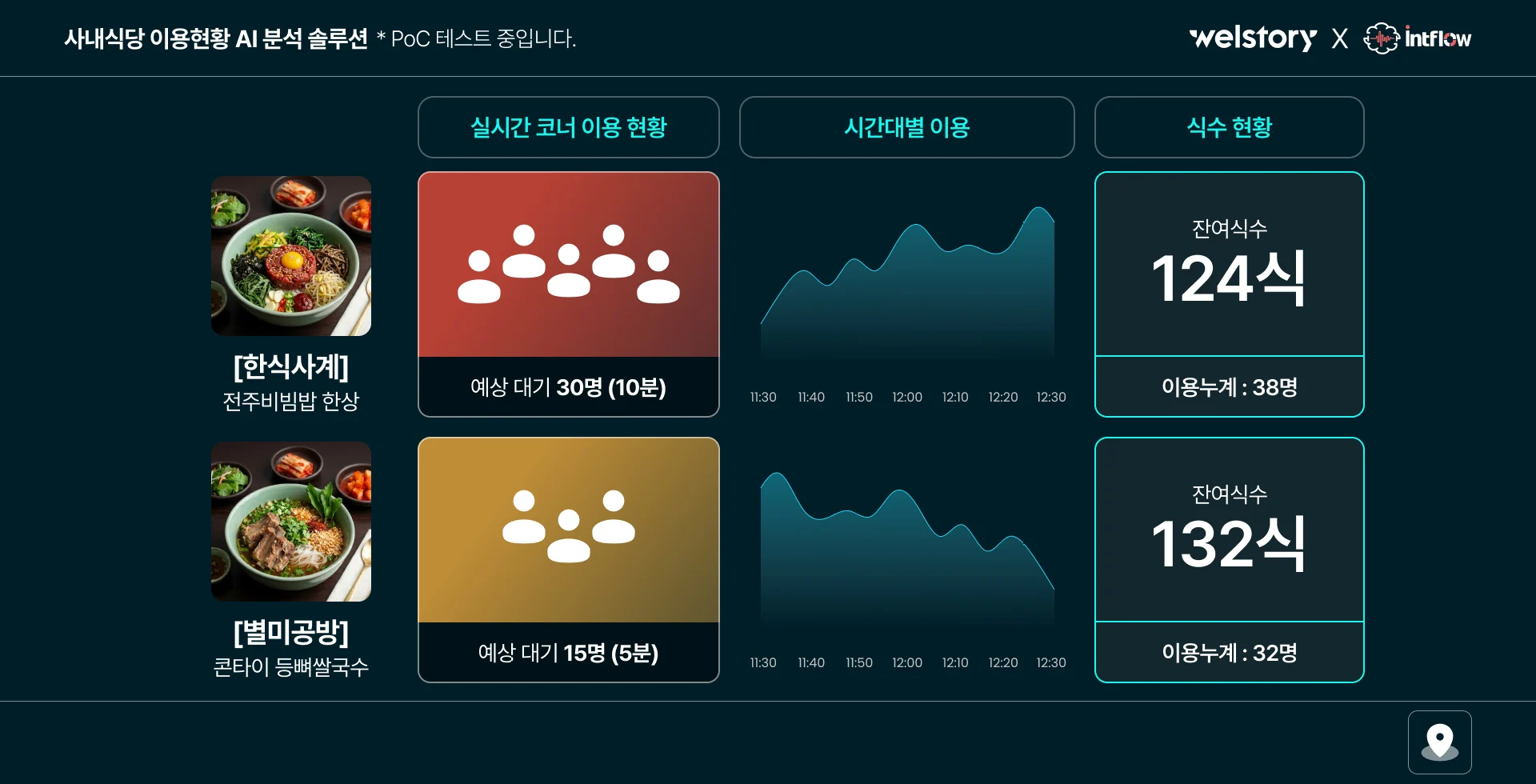
Space Intelligence congestion analytics can be used in a wide range of cafeteria environments.
Aggregate camera detections by zone to show station usage in real time. See where customers are gathering and where capacity remains.
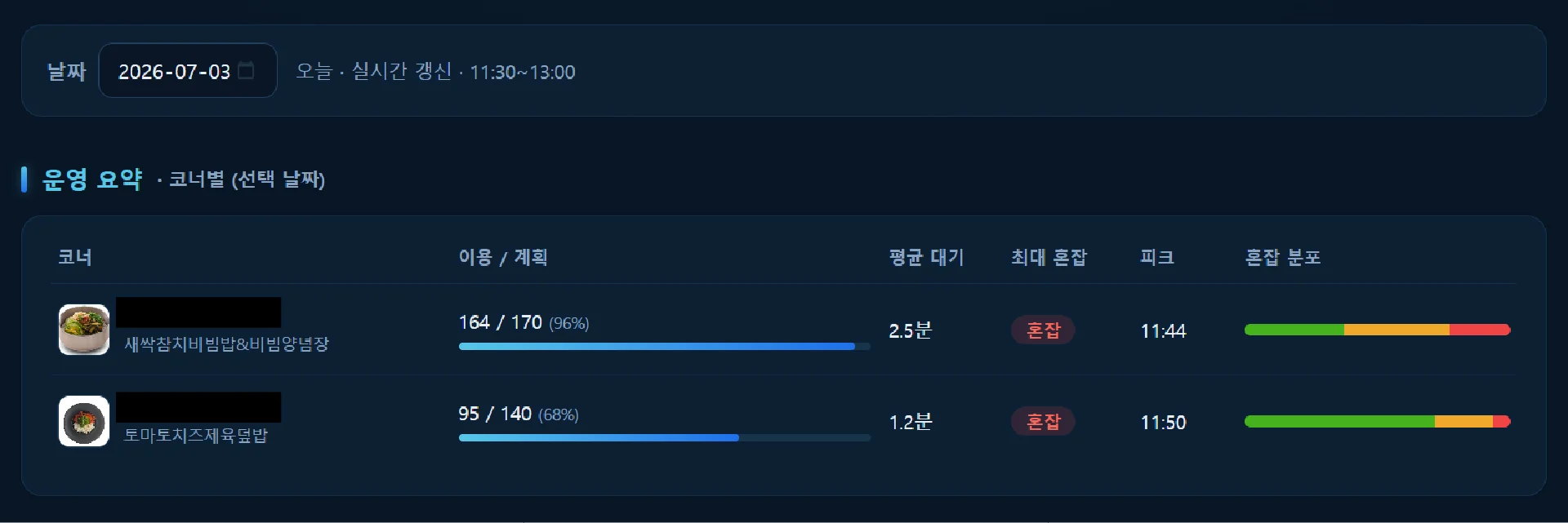
Compare station operations through the numbers.
View usage, actual-to-planned ratios, average waiting times, and peak periods in a table. Quickly compare which stations exceeded expectations and when they were busiest.
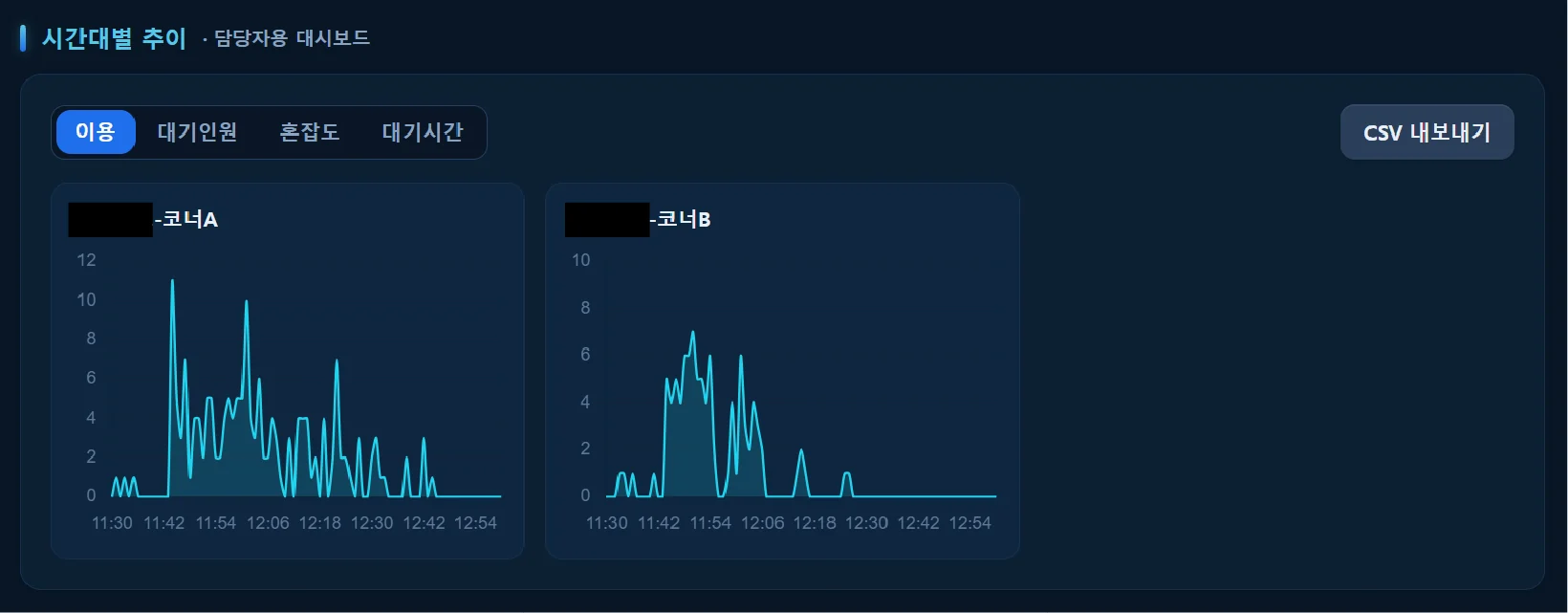
See congestion change over time.
Charts show changes in visitors, queues, congestion, and waiting times. Understand each station's peaks and quiet periods to plan staffing and preparation.